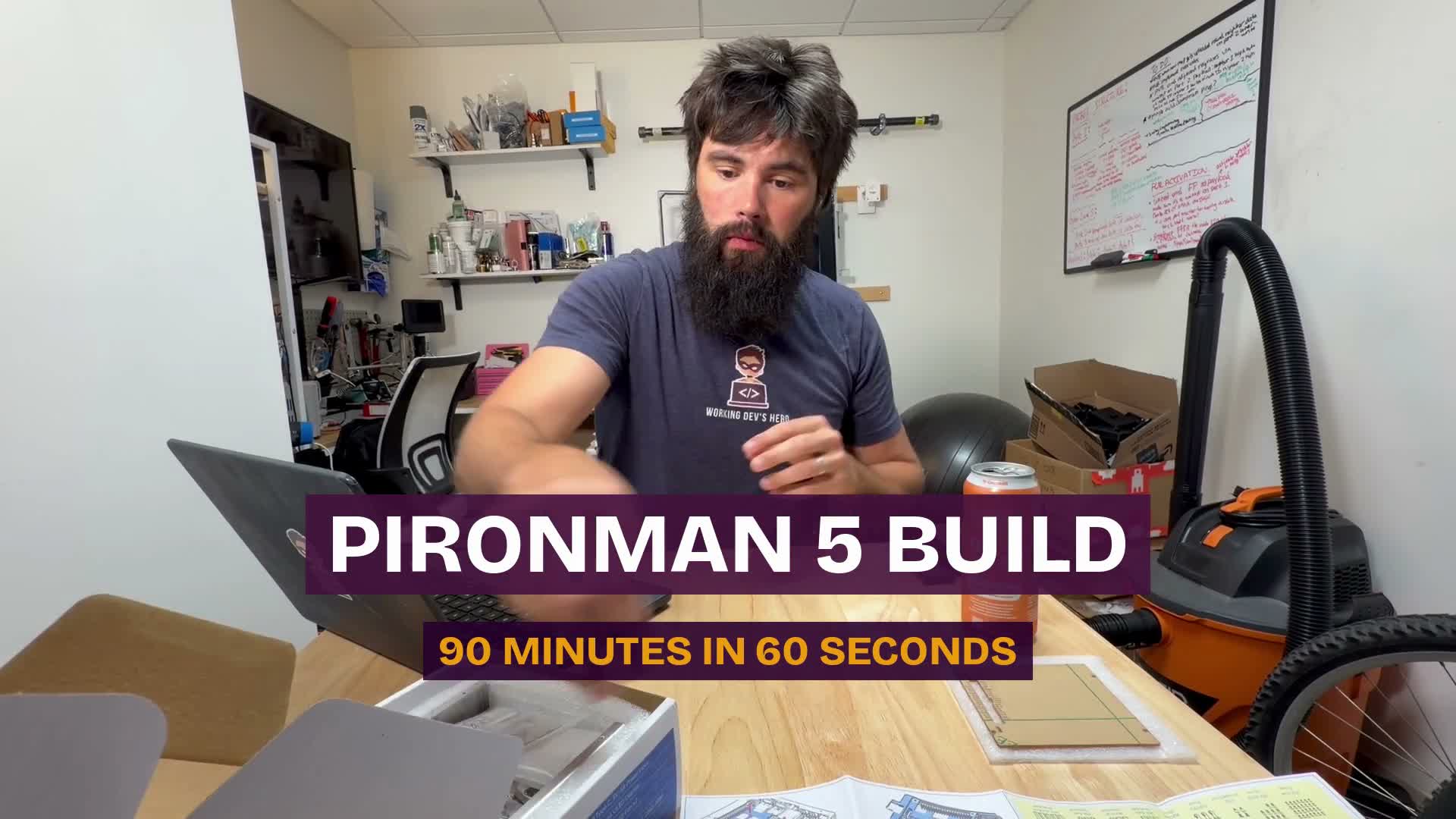
The two Raspberry Pis that run Supermog recently moved into Pironman 5 cases: real PCIe for the NVMe drives, tower coolers, and the little OLEDs our pixel mascot hammers away on. We filmed the first case build, and then made ourselves a rule for the edit: no video editor. The whole thing had to come together in conversation with Claude Code (Fable 5), the same way Supermog itself did.
The Pieces 🧩
- The footage: one static iPhone take on the bench at the Sparx lab. 90-some minutes across two clips, because there’s a mid-build run for a flathead screwdriver hiding in the gap.
- The edit: a single ffmpeg filter graph. Both clips concatenated, run at 115×, titles drawn straight onto the frames in the site’s own Bricolage Grotesque, then a snap back to real time at the exact second the finished case gets held up to the camera.
- The music: Venice’s music API, a 66-second instrumental prompt to the ElevenLabs Music model. Third take kept. The mix ducks under the real-time reveal and fades over the end card.
- The effects: a little Python onset analysis found the track’s drop at 16 seconds and its strongest drum hits. The glitch bursts (hard RGB split plus analog noise) sit on those beats: a double-stutter leading into the drop, single hits on three kicks, and a final burst landing exactly on the timelapse-to-real-time cut. The audio visualizer riding the bottom edge is ffmpeg’s
showfreqsin the brand palette. - The end card: the mascot on a background color-sampled from the logo PNG itself, so the two are seamless.
The Back-and-Forth 🏓
What made this fun wasn’t any single trick, it was the loop. Every round was a sentence of feedback and a fresh preview in the chat:
- “We ended too fast — slow to normal speed when I show the finished case and smile.” Claude scrubbed the footage, found the exact second the case comes up (and the thumbs-up two seconds later), and re-cut with a speed ramp.
- “Make the visualizer about 3× bigger, and put the glitches on interesting points in the audio — before the beat drop, or on drum kicks.” That’s where the onset analysis came from: the effects stopped being decoration and started following the song.
- “Can we say 90 minutes instead of 95? It’s cleaner.” One word in a filter graph, one re-render.
There were honest stumbles, too. An ffmpeg quirk where fontfile= silently swallowed every option after it. A music API whose innocently named complete endpoint turned out to delete the finished track — we paid for two songs nobody will ever hear. Each one cost a minute, not an afternoon.
Total tooling: a phone, ffmpeg, one API, and a chat window. The video about the system that builds itself got built the same way the system did.
Want the full story of what these little towers actually run? That’s over here: We Built a System That Builds Itself.